
Ventral and incisional hernias are among the more complex abdominal wall hernias, requiring advanced techniques and individualized care. At the Hernia Institute of Louisiana in Metairie, we provide expert evaluation and surgical solutions for patients with these challenging conditions.
Led by Dr. Treen, our team combines decades of surgical experience with the latest technologies and a deep commitment to patient outcomes.

What Are Ventral and Incisional Hernias?
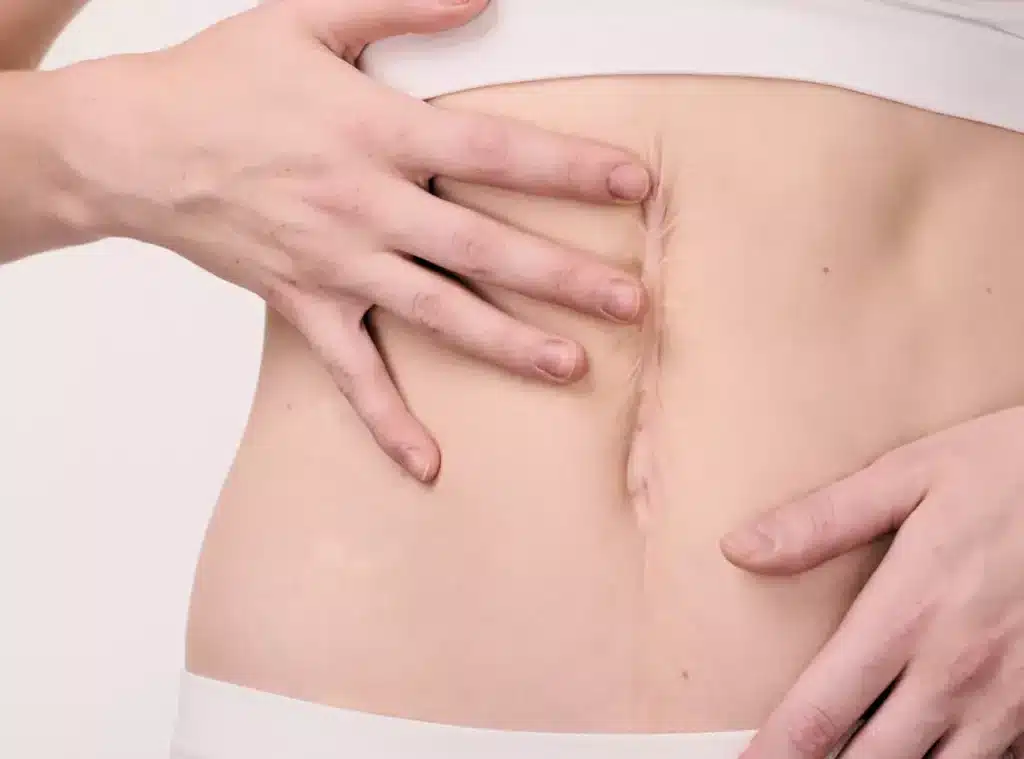
Ventral hernias occur in the abdominal wall where no previous surgery has taken place. Incisional hernias, on the other hand, develop at the site of a prior surgical incision. Both can result in a visible bulge, discomfort, or pain — especially when standing, lifting, or straining. These hernias may develop due to weakened muscle tissue or strain on healing incisions.
Over time, incisional hernias can become larger and more complicated, particularly in patients with a history of multiple abdominal surgeries. Each recurrence increases the risk of future failure, making durable, well-planned repairs essential.
Causes of Ventral and Incisional Hernias
Several factors can contribute to the development of ventral and incisional hernias, including heavy lifting, chronic coughing, obesity, pregnancy, and conditions that increase abdominal pressure. Poor wound healing, post-operative infection, and repeated abdominal procedures can also further weaken the tissue. Over time, these stresses allow internal tissue or organs to push through the weakened area, creating a noticeable bulge.
Personalized Treatment Planning
At the Hernia Institute of Louisiana, each hernia repair plan is highly customized. Most patients undergo a detailed preoperative physical exam and CT scan to fully understand the hernia’s location, size, and complexity. This imaging helps determine the best surgical approach and the most appropriate mesh product for reinforcement.
We emphasize that repairing these hernias without mesh greatly increases the risk of recurrence. Additionally, repairs using only sutures or with minimal mesh overlap are less effective than modern reconstructive techniques.
Advanced Repair Techniques
Depending on the patient’s anatomy and prior surgical history, Dr. Treen may recommend one of the following options:
- Laparoscopic mesh placement: Involves intraperitoneal placement of tissue-separating mesh fixed with transfascial sutures and tacks.
- Open preperitoneal mesh repair (modified Stoppa technique): Offers strong coverage for larger defects.
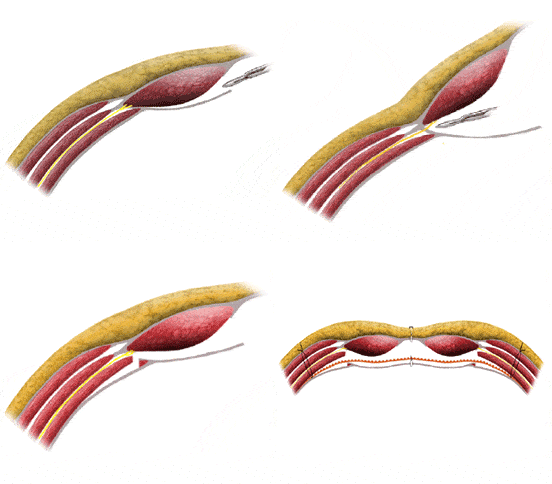
- Open components separation with underlay mesh: For complex reconstructions requiring deeper reinforcement.
- Sandwich technique: Combines underlay and onlay mesh layers for additional support in high-risk patients.

These methods aim to restore abdominal wall strength, reduce recurrence, and improve cosmetic and functional outcomes.

Mesh Products We Use
Choosing the right mesh is essential for a successful repair. Our practice uses several advanced materials:
- Biologic mesh (e.g., Flex HD): Ideal when there’s a risk of infection or contamination; it reduces the likelihood of mesh-related complications.
- Tissue-separating mesh (e.g., Proceed® Mesh): Used when mesh must contact internal organs, minimizing scar adhesions while ensuring strong integration with the abdominal wall.
- Lightweight mesh (e.g., UltraPro or Prolene® Soft Mesh): Used between or on top of abdominal wall layers where separation from internal organs is not needed.
Videos
Recovery After Ventral or Incisional Hernia Repair
Recovery depends on the size of the hernia, the complexity of the surgery, and the patient’s health. While smaller ventral hernias may be repaired on an outpatient basis, larger or more involved cases typically require hospitalization for several days.
Patients may need several weeks to a month or more before returning to work or strenuous activity. Dr. Treen and his team provide detailed aftercare guidance and are committed to your long-term recovery.
Why Choose the Hernia Institute of Louisiana for Ventral and Incisional Hernia Repair in New Orleans, LA?
Dr. Treen is a nationally recognized leader in abdominal wall reconstruction. With decades of experience, board leadership roles, and an academic position at Tulane School of Medicine, he delivers expert care grounded in surgical precision and innovation.
Our approach to ventral and incisional hernias includes:
- Comprehensive evaluation and planning with imaging
- Use of advanced mesh materials and techniques
- Individualized surgical plans for complex cases
- Ongoing follow-up and recovery support
FAQs
Who Is at Higher Risk for Developing an Incisional Hernia After Surgery?
Patients with poor wound healing are at greater risk, including those who smoke, have obesity, diabetes, or chronic lung conditions that cause frequent coughing. Individuals who undergo multiple abdominal surgeries or experience a post-surgical infection are also more likely to develop an incisional hernia. Straining the incision site too soon after surgery—through heavy lifting or intense activity—can further increase the likelihood of hernia formation.
What Happens if a Ventral or Incisional Hernia Is Left Untreated?
If left untreated, a hernia may gradually enlarge and become more uncomfortable. As it grows, repair can become more complex. In some cases, the hernia can trap a portion of the intestine, leading to pain and potential complications. Over time, untreated hernias may interfere with daily activities and quality of life, making timely evaluation and management important to avoid more serious issues.
How Do I Know if My Hernia Is Becoming an Emergency?
Warning signs of an emergency include sudden or severe pain at the hernia site, redness or discoloration of the skin, nausea, vomiting, or an inability to push the bulge back in. These symptoms may indicate that tissue is trapped or its blood supply is compromised. If you notice any of these changes, seek immediate medical attention, as urgent treatment may be required.
What Is the Difference Between a Reducible and Incarcerated Hernia?
A reducible hernia can be gently pushed back into the abdomen or may flatten when lying down, often causing minimal discomfort. An incarcerated hernia cannot be pushed back in and may feel firm or tender. This type of hernia has a higher risk of complications, including restricted blood flow. Incarcerated hernias often require prompt medical evaluation to determine if surgical repair is needed.
Will I Have a Visible Scar After Hernia Repair Surgery?
Most hernia repair procedures result in some degree of scarring, though the size and appearance depend on the surgical approach used. Minimally invasive techniques typically involve smaller incisions and less noticeable scars, while open procedures may leave a larger mark. Over time, scars generally fade and become less prominent. Proper wound care and adherence to post-operative instructions can support better healing.
How Soon Can I Return To Exercise After Ventral or Incisional Hernia Repair?
Light activity, such as walking, is usually encouraged shortly after surgery for better circulation and healing. More strenuous exercise and heavy lifting are typically restricted for several weeks, depending on the complexity of the repair. Dr. Treen will provide guidance based on your specific case. Gradually returning to activity helps protect the repair and lowers the risk of recurrence.
Schedule a Consultation for Ventral or Incisional Hernia Repair
Don’t wait for symptoms to worsen. If you suspect you have a ventral or incisional hernia, schedule a consultation with Dr. Treen at the Hernia Institute of Louisiana. Call 504-218-4922 today to begin your path to long-lasting relief.