

An umbilical hernia can cause significant discomfort and disrupt your daily routine. Whether you’ve noticed a soft bulge near your belly button or are experiencing increasing abdominal pressure, it’s important to get an expert evaluation. At the Hernia Institute of Louisiana in Metairie, we specialize in advanced hernia care, including safe and effective umbilical hernia repair.
Led by Dr. Treen, our practice combines over 20 years of surgical experience with a commitment to patient-first care. Dr. Treen is a Fellow of the American College of Surgeons and a member of the Board of Governors of the American Hernia Society.
What Is an Umbilical Hernia?
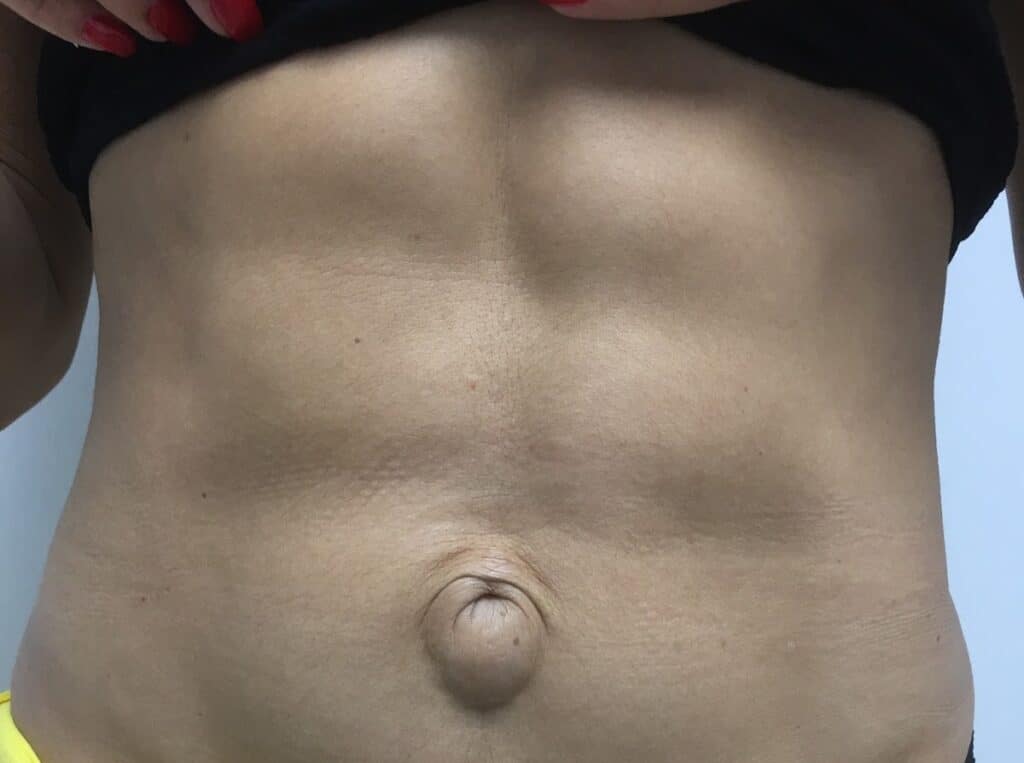
An umbilical hernia occurs when part of the intestine or fatty tissue pushes through a weak spot in the abdominal wall near the navel. While this condition is most common in infants, adults can also develop it.
Umbilical hernias can be the result of a congenital weakness, a pre-existing dilatation of the natural umbilical ring, occupational stress, obesity, collagen deficiency, or previous surgery in the area of the umbilicus. Certain lifestyle choices can contribute to the development of an umbilical hernia as well, such as smoking and overeating.
Common Symptoms of an Umbilical Hernia
Umbilical hernia patients typically experience:
- A noticeable bulge near the belly button
- Discomfort when bending, lifting, or coughing
- Abdominal pressure or aching
- Sharp pain if the hernia becomes trapped or strangulated
It’s especially important to seek prompt evaluation if the bulge becomes painful, firm, or discolored.
Umbilical Hernia Repair Options
At the Hernia Institute of Louisiana, we tailor treatment to each patient’s needs.
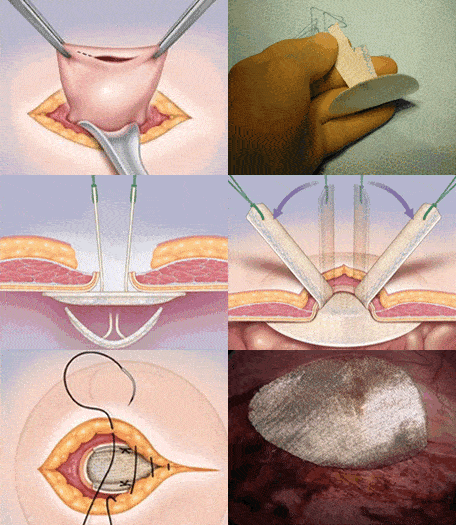
The vast majority of umbilical hernias are small and therefore repairable with a simple mesh patch device, the Proceed Ventral Patch. This device is constructed mostly of absorbable components and a permanent, lightweight mesh foundation. Its attributes make repair simple, fast, and, most importantly, highly reliable, with minimal residual scar tissue.
You can trust that we will prioritize your comfort and long-term health, using proven techniques backed by surgical excellence.
Recovery After Umbilical Hernia Surgery
Patients are free to return to normal leisure and work activities as soon as the minimal postoperative discomfort dissipates. This can be in as little as a few days. Dr. Treen and his team provide clear instructions and ongoing support to ensure a smooth recovery process.

Videos
Why Choose the Hernia Institute of Louisiana for Umbilical Hernia Repair in Metairie?
Dr. Treen has lectured across the US, Canada, and Europe on advanced hernia techniques. His credentials include leadership positions in local and national medical organizations, as well as academic appointments at Tulane School of Medicine. At our center, you benefit from:
- A surgeon with deep expertise in hernia repair
- A personalized, attentive treatment experience
- A dedicated team committed to your recovery
FAQs
How Is an Umbilical Hernia Diagnosed in Adults?
An umbilical hernia in adults is typically diagnosed during a physical examination. Dr. Treen will examine the area around the belly button while you are standing, coughing, or straining slightly to see if a bulge appears. In many cases, the hernia can be identified simply by feeling the protrusion and evaluating symptoms such as tenderness or pressure.
If the diagnosis is unclear or if Dr. Treen needs more detail about the size and contents of the hernia, an ultrasound or CT scan may be recommended. These tools help confirm the diagnosis and assist in planning the most appropriate treatment.
Do All Umbilical Hernias Require Surgery?
Not every umbilical hernia requires immediate surgical repair, but most adult cases are eventually treated with surgery. Unlike some hernias in infants that may close on their own, adult umbilical hernias rarely resolve without intervention. Over time, the opening in the abdominal wall may widen, allowing more tissue to push through and increasing discomfort.
Surgery prevents complications such as incarceration or strangulation, which occur when the herniated tissue becomes trapped. Surgical timing depends on the size of the hernia, your symptoms, your overall health, and other factors. Dr. Treen will help determine the best course of action.
What Happens if an Umbilical Hernia Is Left Untreated?
When an umbilical hernia is left untreated, it may gradually increase in size and become more noticeable or uncomfortable. Activities that raise pressure in the abdomen—such as lifting, coughing, or straining—can worsen symptoms.
In some cases, the protruding tissue may become trapped in the abdominal wall, a condition known as incarceration. If the blood supply to that tissue becomes restricted, it can lead to strangulation, which is a medical emergency requiring immediate surgery.
Is Umbilical Hernia Surgery Performed Under General Anesthesia?
Umbilical hernia surgery can be performed using different types of anesthesia depending on the patient and the specifics of the procedure.
Many repairs are completed under local anesthesia with sedation, which numbs the surgical area while helping the patient remain relaxed. In other situations, particularly for larger or more complex hernias, general anesthesia may be used so the patient sleeps during the procedure.
The choice depends on factors such as the hernia’s size, the surgical technique being used, and your medical history. Dr. Treen will recommend the approach that best fits your needs.
How Long Does Umbilical Hernia Surgery Usually Take?
Umbilical hernia repair is typically a relatively short procedure. In many cases, it takes about 30 minutes to an hour to complete.
The exact duration depends on factors like the size of the hernia, whether mesh is used for reinforcement, and whether the repair is performed using an open or minimally invasive approach. Additional time may be needed before and after the procedure for anesthesia preparation and recovery monitoring.
Because the surgery is often performed on an outpatient basis, most patients are able to return home the same day once they have recovered from anesthesia.
Will I Need Someone To Drive Me Home After Surgery?
For safety reasons, patients are usually not allowed to drive themselves home after the hernia repair procedure. The surgery commonly involves anesthesia or sedation, which can temporarily affect coordination, alertness, and reaction time.
Arrange transportation in advance and, if possible, have someone stay with you for the first day after surgery. This support can be helpful while the anesthesia fully wears off and while you begin the early stages of recovery.
Schedule Your Umbilical Hernia Consultation in Metairie, LA
If you suspect you have an umbilical hernia, trust the Hernia Institute of Louisiana for expert care. Schedule a consultation with Dr. Treen in Metairie by calling 504-218-4922. Relief is just one appointment away.