
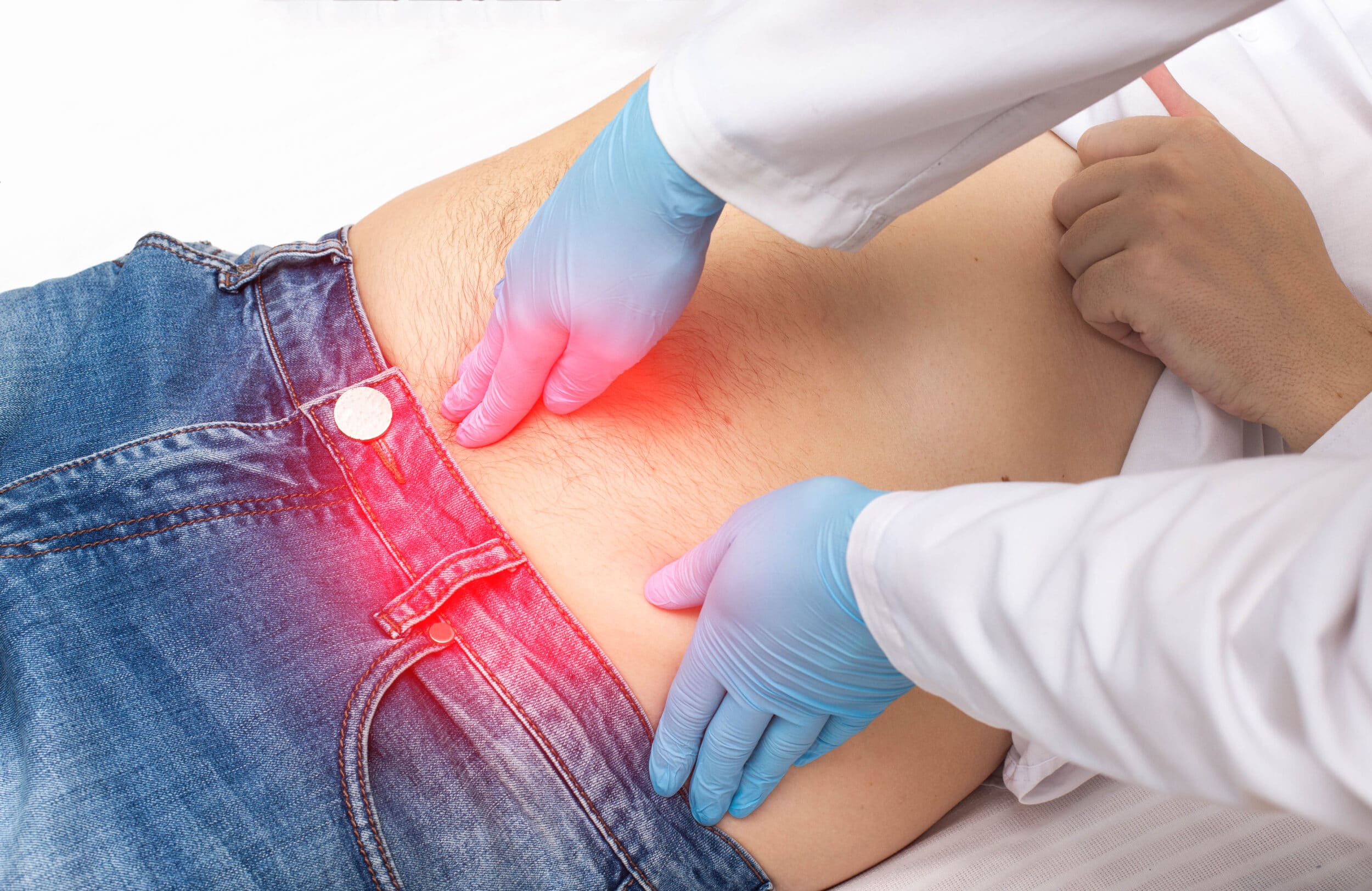
A small bulge near your belly button may not seem like a big deal at first. However, a belly button hernia can become uncomfortable and, sometimes, cause serious complications if left untreated. Many adults are surprised to learn that umbilical hernias are not just a condition seen in infants. Everyday factors can also weaken the abdominal wall over time.
At the Hernia Institute of Louisiana, patients receive care from David C. Treen, Jr., MD, FACS, a nationally recognized hernia specialist with more than 30 years of experience in advanced hernia repair. Dr. Treen’s extensive background helps patients get to the bottom of their condition and feel confident about their treatment options.
What Is a Belly Button Hernia?
A belly button hernia, also called an umbilical hernia, involves part of the intestine or fatty tissue pushing through a vulnerable area in the stomach muscles near the navel. This may create a visible bulge that is more noticeable when coughing, lifting, or standing.
Causes of Umbilical Hernias
Several issues can contribute to belly button hernias. The following are some of the most common causes.
1. Excess Weight and Obesity
Extra weight places constant strain on the muscles surrounding the belly button, which can gradually weaken the abdominal wall. People who carry fat around the midsection may be at even greater risk because the pressure is concentrated in the abdomen.
2. Pregnancy
Pregnancy can also contribute to hernias, especially in women who have had multiple children. As the baby grows, the stomach muscles stretch to make room for the uterus. This stretching may strain tissue around the belly button.
3. Heavy Lifting and Physical Strain
Frequent heavy lifting can increase intra-abdominal pressure and lead to muscle weakness over time, which explains why people with physically demanding jobs are at a higher risk of developing an umbilical hernia. Improper lifting techniques can also make the problem worse.
4. Previous Abdominal Surgery
Past abdominal procedures may compromise nearby tissue and increase the likelihood of hernias developing later. Surgical incisions sometimes create vulnerable areas where tissue can push through more easily.
Know When to Seek Treatment
A belly button hernia may start small, but it can become more painful or more difficult to repair if left untreated. Early evaluation helps to prevent complications and provides relief from discomfort.
At the Hernia Institute of Louisiana, Dr. David C. Treen, Jr., MD, FACS, offers advanced hernia care for patients throughout the New Orleans area. Call 504-218-4922 today to schedule a consultation.