
At the Hernia Institute of Louisiana, patients receive care guided by Dr. David C. Treen, a board-certified surgeon with decades of experience, academic appointments, and leadership roles in national surgical organizations. His work in advancing hernia repair methods has shaped techniques used across the globe.
Our practice focuses exclusively on general surgery, hernia management, offering detailed evaluations, modern repair approaches, and a level of specialization that supports consistent, reliable outcomes for a wide range of hernia conditions.

The repair of inguinal hernia is the most common hernia repair procedure in the world, and the most frequently performed surgical procedure among general surgeons. Unfortunately, most general surgeons in the US and around the world have not embraced the latest and most effective techniques for hernia surgery.

Over the last several years, more and more publicity has emerged around professional athletes undergoing surgery for a “Sports Hernia”. In fact, the condition is perhaps more accurately labeled Athletic Pubalgia (pain in the pubic region) or by one of several other names.

This is actually a type of groin hernia very similar to an inguinal hernia. Unlike inguinal hernias, femoral hernias occur more commonly in women, and usually in older women. The repair of these hernias is essentially identical to that of inguinal hernias.

General surgery focuses on diagnosing and treating a wide range of conditions affecting the abdomen, digestive system, and other internal organs, often using minimally invasive techniques.

Umbilical hernias can be the result of a congenital weakness, a pre-existing dilatation of the natural umbilical ring, occupational stress, obesity, collagen deficiency, or previous surgery in the area of the umbilicus. Certain lifestyle choices can contribute to the development of an umbilical hernia as well, such as smoking and overeating.

Patients who suffer from chronic heartburn or gastroesophageal reflux disease (GERD) may have a condition called a hiatal hernia. This is a dilatation of the normally occurring teardrop-shaped opening in the diaphragm through which the esophagus passes from the chest into the abdomen to reach the stomach.

Hernias can occur in the abdominal wall with or without a previous surgical scar. Incisional hernias can occur at any previous abdominal incision site and at any time after surgery. Ventral hernias can also occur in a variety of locations in the abdominal wall without previous surgical incision.
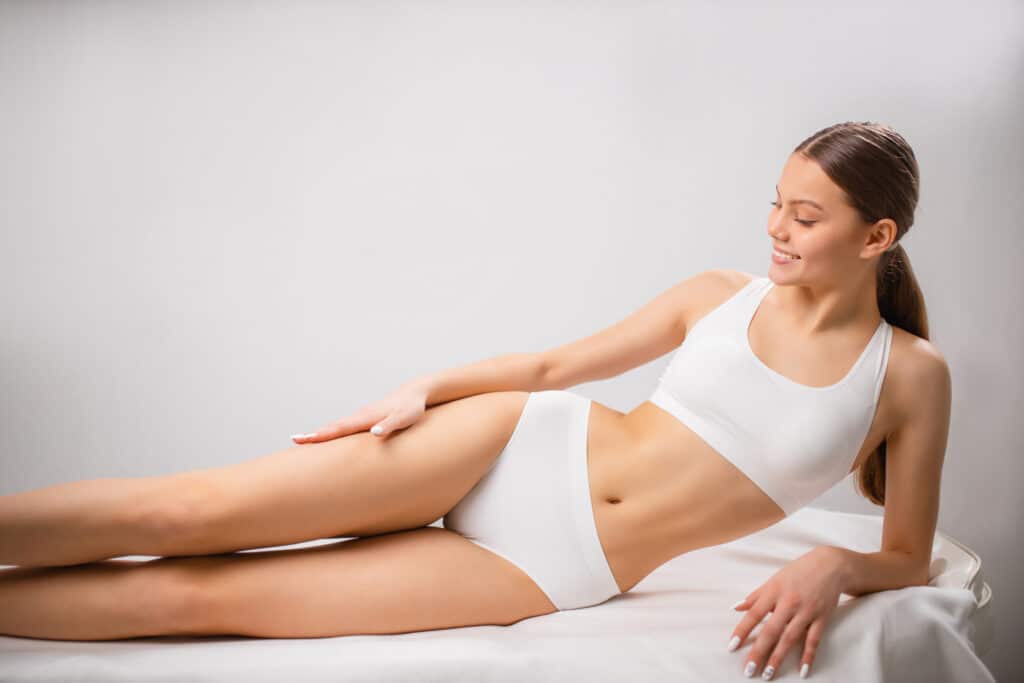
CoolSculpting® is a non-surgical fat reduction treatment that uses controlled cooling to target and reduce stubborn fat cells beneath the skin. Over time, the body naturally removes these treated cells, helping smooth and contour areas that have not responded to diet or exercise.
Schedule a Hernia Repair Consultation
If you’re exploring treatment options for any hernia, the Hernia Institute of Louisiana offers guidance built on years of focused surgical experience. Our team can help you understand your condition and what to expect from the repair.
To speak with someone who can answer your questions and help you plan your next steps, contact the Hernia Institute of Louisiana at 504-218-4922.